 Big
Big  Should your person be reading this instead?
"Don't Get Me Anything for My Birthday" Is Not the Same as "Do Nothing"
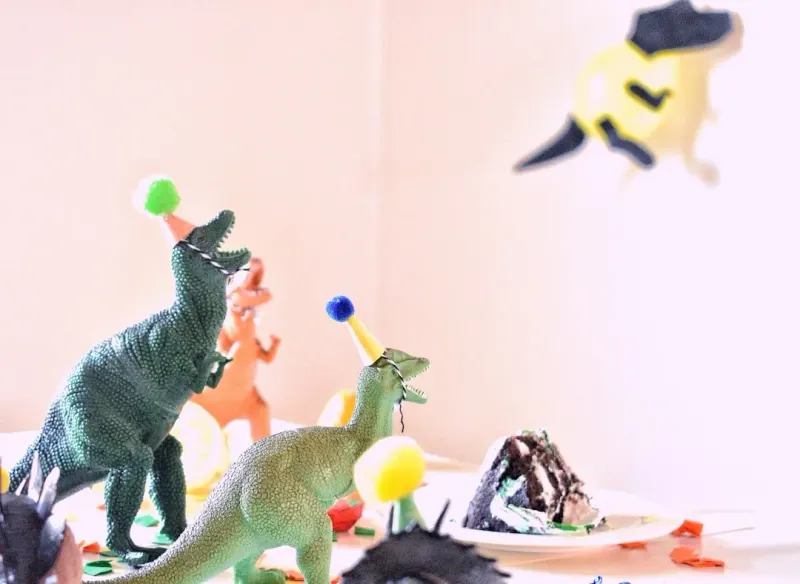
You asked her what she wanted for her birthday. She said don't get me anything.
Now you have to work out what that sentence means, and there is no graceful way to ask again. Asking twice sounds like you did not believe her the first time.
Most people pick one of two answers. Take her at her word and do nothing, then spend the day quietly reading her face. Or ignore her completely and buy something expensive, because expensive at least looks like proof.
Both of those are guesses.
The odd thing is that gift giving is one of the most heavily studied small behaviors in social psychology, and the studies keep landing on the same conclusion. Givers are wrong about this. Not wrong about caring. Wrong about the mechanics.
Nothing is the one answer she almost certainly does not mean
We cannot point you to a study that reads your partner's mind. Nobody has run that experiment.
What researchers have measured is what happens when the gift does not arrive.
A team at Ohio State led by Cory Haltman ran six studies on late gifts, published in the Journal of Consumer Psychology. Givers were convinced that a late gift would damage the relationship. Recipients were far more forgiving than givers predicted, and they did not read lateness as a signal that the giver cared less.
But there was one thing recipients did not shrug off. Getting no gift at all was rated as considerably more harmful to the relationship than getting one very late.
So the order recipients gave was: on time, late, nothing. Nothing came last, and not by a small margin.
That does not prove she is secretly hoping for a wrapped box. It does mean that treating “don't get me anything” as permission to let the day pass is the highest-risk reading available to you.
In our experience, that sentence is almost always about the object and the money. It is rarely about the day.
She is not asking you to skip her birthday. She is asking you not to buy her a thing.
Ask her anyway. The research on this is close to rude about it.
Francesca Gino and Francis Flynn ran five studies on solicited versus unsolicited gifts.
Recipients were more appreciative of gifts they had explicitly asked for. Givers assumed the two would be appreciated about equally.
The gap is about signaling. Givers expect the gift nobody asked for to read as more thoughtful than it actually does. The recipient mostly just sees the object.
The same research found something more uncomfortable. Givers believed recipients would not appreciate money as much as a requested gift. Recipients felt the opposite way.
Gino and Flynn's advice to recipients was that instead of assembling one big wish list, they should name one big wish. That works in reverse too. When you ask her, ask for one specific thing, not a menu.
The objection here is obvious. Asking ruins the surprise, and the whole point is to show that you were paying attention all year.
Yan Zhang and Nicholas Epley tested that assumption directly. Across their experiments, a giver's thought raised the recipient's appreciation mainly when something prompted the recipient to think about it, such as a friend handing over a bad gift. Givers never get that prompt, so they systematically mispredict when their effort will register.
Their final experiment found that the thought does reliably count for one person. The giver. Putting thought into a gift increased the giver's own sense of connection to the receiver.
Which is worth knowing. The mental work you do guessing is real, and it is doing something. It is mostly doing it to you.
The price tag is carrying less weight than you think
Flynn and Gabrielle Adams looked at what money actually buys in a gift exchange.
They surveyed recently engaged couples. The men expected that a more expensive ring would be appreciated more. Their fiancées, rating appreciation on a scale of one to seven, reported no such link.
A nationwide sample recalling a recent birthday gift showed the same split. So did a study using a graduation present: people assigned to be givers thought an iPod would be appreciated more than a CD, and people assigned to be receivers reported no meaningful difference between them.
Adams put it plainly: “You simply don't have to spend that extra hundred dollars to get the same level of appreciation for a gift.”
This matters for your specific situation. If part of what she meant was please don't spend money on me, that constraint costs you much less than it feels like it does.
You are not being asked to give her a worse birthday. You are being asked to give her a cheaper one.
Give her the day, not the object
Cindy Chan and Cassie Mogilner surveyed 219 gift givers and asked what they had most recently given. Seventy-eight percent said a material gift. An object.
In their first study, 59 pairs of friends came into a lab. One person in each pair was randomly made the giver and handed $15. Half were told to buy an experiential gift, half a material one. Every giver was told to buy something their friend would use without them, specifically so that “we spent time together” could not explain the result.
A week later, recipients rated how strong their relationship with the giver felt, compared with before.
Recipients of experiential gifts had moved slightly up. Recipients of material gifts had moved slightly down. Eighty-six percent of them had not used the gift with the giver at all.
Two details make this finding sharper. Recipients' guesses at what the gifts cost were effectively identical, around fourteen dollars either way. And their ratings of how thoughtful the gift was, and how much they liked it, did not differ significantly between the two groups.
So the experiential gifts did not win by seeming more thoughtful. They did not win by being better liked. They won anyway.
The second study is the one worth remembering. Two hundred givers were each handed the same gift-wrapped coffee mug to give to someone they knew. The only difference was the words printed on it. Half read “my coffee time.” Half read “my coffee cup.”
Recipients of the “my coffee time” mug reported a greater strengthening of the relationship. They did not like the mug any better. Same object, same price, same person. One sentence on the side of it pointed at an experience instead of a possession, and that was enough to move the number.
This sits on top of older work. Leaf Van Boven and Thomas Gilovich found across two surveys and a set of lab experiments that people reported experiential purchases making them happier than material ones. Part of their explanation was that experiences do more for relationships between people than possessions do.
Which is why “I have planned Saturday” tends to beat “I bought you a bag,” even when the bag costs considerably more.
Tell her the plan a week early
There is a reason not to save it all for the morning of.
Amit Kumar, Matthew Killingsworth and Thomas Gilovich ran four studies on what happens while you are waiting.
In the first, 97 students described a purchase they were about to make. Waiting for an experience was rated as clearly more pleasant than waiting for a possession, and it felt more like excitement than impatience. The two kinds of purchase did not differ in cost.
In the second, 2,266 adults were pinged at random moments during the day. People who happened to be thinking about a future experience were happier than people thinking about a future thing they were going to own.
The third study is the one that sticks. The researchers pulled 149 news articles about people waiting in line, published over two years, and had coders who did not know the hypothesis rate what the line was for and how the crowd behaved.
The articles describing genuinely bad behavior, smashing windows and rioting, clustered on the material end of the scale. The articles describing singing and playing games in the queue clustered on the experiential end.
People waiting for a thing get ugly. People waiting for an experience have a nice time in the line.
The waiting is part of the gift, and it is the part a wrapped box cannot give her, because a box only exists for the thirty seconds before it is open.
Tell her on Monday that Saturday is hers and that you have handled it. She gets five days of looking forward to it. You get five days of her being pleased with you before anything has actually happened.
And if she hates surprises, say more, not less.
The sentimental thing you talked yourself out of
Julian Givi and Jeff Galak tested a specific hesitation.
In one experiment, participants chose between a framed photo of a friend's favorite musician and a framed photo of the two friends together from a memorable day. In another, romantic partners chose between a gift card to a favorite store and a photo frame with their initials carved into it.
In both, recipients wanted the sentimental option more often than givers chose to give it.
The reason is risk. Givers feel confident that a gift matched to a known preference will land. They feel much less confident about the sentimental one. As Givi described it, givers view sentimentally valuable gifts as “having the potential to be either home runs or strikeouts,” while a preference-matching gift looks like “a sure single.”
So they take the single. Every year.
Lara Aknin and Lauren Human found something adjacent across six studies. People say they prefer to give and receive gifts that reflect the recipient. But both givers and recipients reported feeling closer after a gift that reflected the giver. Their explanation is that giving something of yourself is a form of self-disclosure, and self-disclosure is what builds closeness.
These studies disagree, and the disagreement is the useful part
Gino and Flynn say give her what she asked for. Givi and Galak say give her the sentimental thing she did not ask for. Aknin and Human say give her something of you rather than something of her.
That looks like a contradiction. It is not, because they are not measuring the same outcome.
Gino and Flynn measured appreciation and liking. Chan and Mogilner and Aknin and Human measured relationship strength, and Chan and Mogilner specifically found their result was not explained by how much recipients liked the gift or how thoughtful they judged it.
Liking and closeness are two different levers. You can pull both.
Ask her for one specific thing, so the object lands. Then add one thing she could not have requested, because she would never have asked for it, and that is precisely what makes it mean something.
One gift is hers. One gift is yours.
What to actually do this year
- Ask one question and ask for one answer
Not “what do you want,” which she has already refused. Try: “I am not buying you a pile of stuff, I promise. Tell me one thing.”
One big wish, not one big wish list. Then buy that thing without improving on it.
- Decide the shape of the day before you book anything
How the morning starts, what the afternoon holds, what the evening is, and how the night ends. Four decisions.
Flow matters more than precision. A day that has a shape feels effortless even when it took three weeks to arrange.
- Tell her early enough that she gets to look forward to it
You do not have to reveal everything. Tell her the date is spoken for, roughly how to dress, and that she does not need to think about any of it.
The anticipation is not a spoiler. It is a second gift.
- Put in the one thing only you would have picked
The photo of the two of you rather than the tasteful print. The song. The place you went the first time.
This is the part that feels risky. That feeling is exactly the bias the research describes, and it is why almost nobody does it.
- Keep something from it
A photo, a ticket stub, the note. Anything physical.
Experiences hold up well in memory, but only if something exists later to point at.
If the planning is the part you are stuck on
Knowing your person is not the same skill as turning that knowledge into a day. Plenty of people are excellent at the first and useless at the second.
That gap is what we built The Birthday Plan for. You fill in a short questionnaire about her. We come back within 72 hours with a full plan: the concept, the timing, the activity, dinner, gift and surprise suggestions with links, the small personal touches, and backups for when the restaurant loses your reservation.
It costs $29, which is less than the panic gift you were going to buy on the way home.
See The Birthday Plan$29. Delivered within 72 hours.
“Don't get me anything” is a sentence about objects
She may genuinely not want a thing. Plenty of people do not. Most gifts are clutter with a ribbon on it.
None of that tells you anything about whether she wants the day to feel like hers.
So take her seriously about the object. Take her a little less seriously about the birthday.
Ask her for one thing. Spend less than you were planning to. Give her a day instead of a box, and tell her about it early enough that she gets to enjoy the waiting. Add one thing that could only have come from you.
Then get out of the way and let her be the point of it.
Research referenced
- Haltman, C., Herziger, A., Donnelly, G. E., and Reczek, R. W., “Better Late Than Never? Gift Givers Overestimate the Relationship Harm From Giving Late Gifts,” Journal of Consumer Psychology.
- Gino, F., and Flynn, F. J., “Give Them What They Want: The Benefits of Explicitness in Gift Exchange,” Journal of Experimental Social Psychology.
- Zhang, Y., and Epley, N., “Exaggerated, Mispredicted, and Misplaced: When ‘It's the Thought That Counts' in Gift Exchanges,” Journal of Experimental Psychology: General.
- Flynn, F. J., and Adams, G. S., “Money Can't Buy Love: Asymmetric Beliefs About Gift Price and Feelings of Appreciation,” Journal of Experimental Social Psychology.
- Chan, C., and Mogilner, C., “Experiential Gifts Foster Stronger Social Relationships Than Material Gifts,” Journal of Consumer Research.
- Van Boven, L., and Gilovich, T., “To Do or to Have? That Is the Question,” Journal of Personality and Social Psychology.
- Kumar, A., Killingsworth, M. A., and Gilovich, T., “Waiting for Merlot: Anticipatory Consumption of Experiential and Material Purchases,” Psychological Science.
- Givi, J., and Galak, J., “Sentimental Value and Gift Giving: Givers' Fears of Getting It Wrong Prevents Them From Getting It Right,” Journal of Consumer Psychology.
- Aknin, L. B., and Human, L. J., “Give a Piece of You: Gifts That Reflect Givers Promote Closeness,” Journal of Experimental Social Psychology.
Ready to plan your own big moment? Start with a birthday or the Big Q. Or let the date night membership build you one every month, venue and timing included.